
Understand the 14 Principles of Management by Henri Fayol
 May 5, 2025
 13 min read




Table Of Content
- Who Was Henri Fayol? The Father of Modern Management
- The Historical Context: Why Fayol Developed His Principles
- Overview of the 14 Principles of Management
- 1. Division of Work
Henri Fayol's 14 Principles of Management are a cornerstone of modern management theory. These principles offer a framework for effective management and strategic planning.
Fayol, a French engineer, introduced these principles in 1916. His work laid the foundation for business management practices we use today.
Understanding these principles can enhance management skills and improve organizational performance. They are relevant to both small businesses and large corporations.
The principles cover various aspects of management, from authority to team spirit. They emphasize the importance of clear communication and coordination.
Fayol's ideas are adaptable and can be applied across industries. They encourage a holistic view of business management.
These principles are still taught in management education worldwide. They provide a guide for developing management best practices.
Fayol's work underscores the balance between authority and responsibility. It highlights the role of management in achieving organizational success.
By exploring these principles, managers can navigate complex business environments. They can also foster a cohesive and motivated workforce.
 ChatGPT
 Perplexity
 Claude
 Grok
GrokWho Was Henri Fayol? The Father of Modern Management
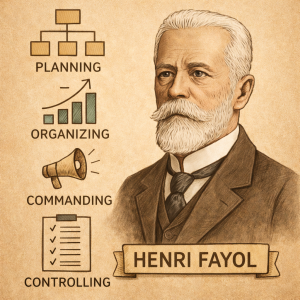
Henri Fayol, a pivotal figure in management history, was born in 1841. He was a French mining engineer by profession. Over time, he emerged as a leading management theorist.
Fayol spent much of his career at a mining company. His experiences there shaped his understanding of management’s complexities. He observed the critical role effective management played in organizational success.
In 1916, Fayol shared his insights in his book “Administration Industrielle et Générale.” This work introduced the 14 Principles of Management. These principles provided a blueprint for running organizations efficiently.
Fayol emphasized the systematic nature of management. He believed in integrating various business functions and processes. His approach was both practical and strategic.
Fayol’s contribution transcended his era. His principles are still applied in business management worldwide. They are considered essential for developing management skills and practices.
Contributions: Developed foundational management principles
Occupation: Mining engineer and management theorist
Legacy: Influential work on organizational management
The Historical Context: Why Fayol Developed His Principles
The early 20th century was a time of industrial transformation. Companies were expanding rapidly and the need for effective management grew. Organizations were seeking ways to manage resources more efficiently.
During this era, Fayol recognized a gap in management practices. There was a lack of formal education and standardization in management. Managers relied heavily on personal experience rather than structured theory.
Fayol aimed to create a cohesive framework to guide managers. He sought to establish principles that could be universally applied across industries. His goal was to improve operational efficiency and decision-making processes.
His principles were revolutionary at the time. They laid the groundwork for modern strategic management. Today, they continue to influence both management education and practice.
Overview of the 14 Principles of Management
Henri Fayol introduced a set of principles that are central to understanding effective management. These principles provide a foundation for organizational structure and decision-making. They serve as a guide to managerial practices and policies.
The principles are designed to ensure efficiency and harmony within organizations. By adopting these guidelines, managers can align activities and foster a productive work environment. They are versatile and adaptable to various management situations.
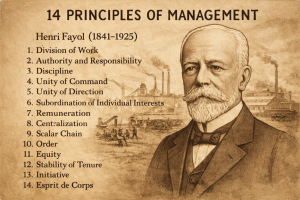
Here are Fayol’s 14 Principles of Management:
- Division of Work
- Authority and Responsibility
- Discipline
- Unity of Command
- Unity of Direction
- Subordination of Individual Interests
- Remuneration
- Centralization
- Scalar Chain
- Order
- Equity
- Stability of Tenure
- Initiative
- Esprit de Corps
Understanding these principles can greatly enhance management skills and business acumen.
1. Division of Work
The principle of Division of Work is all about specialization. Henri Fayol believed that when tasks are divided among employees, efficiency increases. Specialization allows workers to become experts in their tasks, boosting productivity.
This principle aligns with modern management practices where job roles are clearly defined. With clear roles, employees can focus on their strengths and contribute effectively. This reduces time spent on switching tasks and learning new skills.
Key aspects of Division of Work include:
- Increased efficiency
- Enhanced employee skills
- Higher productivity
Incorporating Division of Work in management helps in optimizing resources. It also leads to a more organized and less chaotic workplace, improving overall performance. Specialization not only benefits the organization but also provides employees with a sense of purpose and achievement.

2. Authority and Responsibility
Authority and Responsibility are crucial in effective management. Fayol emphasized the balance between the right to give orders and the power to ensure obedience. Managers need authority to implement decisions while being accountable for those decisions.
Without responsibility, authority can lead to misuse of power. Therefore, managers should not only delegate tasks but also ensure they take ownership of outcomes. This builds trust within an organization and promotes ethical leadership.
Key elements of this principle:
- Balance of power
- Ownership of actions
- Ethical leadership
Implementing this principle supports a structured and trustworthy environment. Authority is not just a privilege but a crucial aspect for achieving organizational goals. When authority and responsibility are evenly matched, it can lead to smoother operations and cohesive teamwork.
3. Discipline
Discipline is vital for the proper functioning of any organization. It reflects respect and compliance with established rules and procedures. Employees’ adherence to norms is essential for maintaining order and achieving goals.
Managers have a key role in establishing a culture of discipline. They must ensure that policies are clear and consistently enforced. Transparency and fairness in rule enforcement foster trust within the workforce.
Elements that contribute to discipline include:
- Clear guidelines
- Consistent enforcement
- Fair treatment
Without discipline, organizational chaos can ensue, disrupting productivity. A disciplined environment ensures that everyone works towards common objectives, promoting harmony and efficiency. By maintaining discipline, managers lay the groundwork for a cooperative and effective workplace.
4. Unity of Command
Unity of Command is essential for organizational clarity and structure. It ensures that employees receive directions from one superior only. This prevents confusion and conflicting instructions.
Managers should streamline communication paths to uphold this principle. With a single source of authority, tasks are clearer and responsibilities are well-defined. This structure helps maintain accountability and focus.
Key aspects of Unity of Command include:
- Clear hierarchy
- Defined roles
- Consistent direction
Adhering to this principle prevents workplace conflicts and misunderstandings. It fosters a sense of responsibility and coherence within teams. By ensuring Unity of Command, managers can enhance efficiency and promote a productive work environment.
5. Unity of Direction
Unity of Direction focuses on aligning the organization towards shared objectives. It requires that all activities aimed at achieving the same goal are directed by one manager. This ensures that efforts are coordinated effectively.
The principle of Unity of Direction is crucial for strategic management. By aligning the workforce under a single plan, companies can streamline operations. This helps in avoiding redundant work and achieving set targets more quickly.
To implement Unity of Direction, consider these elements:
- Common objectives
- Coordinated strategies
- Unified leadership
When teams work towards a common goal, efficiency improves and resources are used wisely. Unity of Direction enhances teamwork, leading to a more cohesive and effective business environment.





6. Subordination of Individual Interests to General Interest
The principle of Subordination of Individual Interests to the General Interest emphasizes prioritizing organizational goals over personal agendas. This is essential for a harmonious and effective business environment. When employees focus on personal gains, conflicts and inefficiency can arise.
To ensure this principle is upheld, management should communicate organizational goals clearly. Employees must understand their role in contributing to the larger mission. Encouraging a culture of collaboration and unity can help align personal interests with company objectives.
Key steps to achieve subordination:
- Encourage team spirit
- Communicate goals clearly
- Reward alignment with organizational values
By maintaining this balance, companies can ensure that personal ambitions do not hinder collective success. This leads to greater cohesion and progress within the organization.
7. Remuneration
Remuneration refers to the compensation or payment employees receive for their work. Henri Fayol emphasized fair and satisfactory remuneration for motivating and retaining employees. It should be equitable for both the organization and its workforce.
Establishing a fair remuneration system requires balancing financial constraints and employee expectations. Competitive salaries, incentives, and benefits packages can enhance job satisfaction and productivity. Transparency in pay structures also builds trust and loyalty within the team.
Considerations for an effective remuneration system:
- Competitive salary benchmarking
- Clear criteria for performance-based incentives
- Additional benefits to support employees’ well-being
By implementing equitable remuneration, businesses can reduce turnover rates and boost morale. This approach not only benefits employees but also strengthens the organization’s overall performance.
8. Centralization
Centralization involves concentrating decision-making authority at the top levels of the organization. According to Fayol, balancing centralization and decentralization depends on the company’s situation. This principle ensures that critical decisions align with the organization’s strategic objectives.
Achieving the right level of centralization involves assessing various factors like the size of the organization and the complexity of tasks. In larger organizations, decentralization might empower lower-level managers to make quicker decisions. However, in smaller organizations, centralization can maintain uniformity and control.
Key considerations for effective centralization:
- Assess the company size and complexity
- Balance authority with responsibility
- Ensure alignment with strategic goals
Finding the right balance between centralization and decentralization contributes to effective management, paving the way for streamlined operations and strategic decision-making.
9. Scalar Chain
The scalar chain represents the clear line of authority within an organization. This principle outlines the hierarchy of reporting from the top executive down to the lowest rank. It helps maintain order and ensures proper communication channels.
Having a defined scalar chain prevents confusion and promotes clarity. Employees know to whom they report and who is responsible for specific decisions. This structure also fosters accountability throughout the organization.
Key points in managing the scalar chain include:
- Maintaining clear communication lines
- Ensuring defined roles and responsibilities
- Promoting transparency and accountability

10. Order
Order in an organization ensures everything has its place and purpose. Fayol emphasizes that both people and materials should be in the right location. This approach maximizes efficiency and minimizes wasted time.
Maintaining order involves organizing resources efficiently. This requires strategic planning and effective allocation of tasks and materials. When employees are aware of where resources are and how to use them, productivity can flourish.
Key aspects of maintaining order include:
- Assigning the right tasks to the right people
- Ensuring resources are available when needed
- Streamlining processes to prevent delays
Order forms the backbone of effective management by creating a well-structured work environment where resources are optimized, and workflows are uninterrupted.
11. Equity
Equity in management involves fairness and justice. Fayol recognized the importance of treating employees with kindness and respect. This promotes a positive work environment and builds trust between managers and staff.
Fair treatment motivates employees, which boosts productivity. Managers must balance discipline with fairness to maintain employee morale. Ensuring equitable practices is crucial for organizational harmony.
Key elements of equity include:
- Fair and unbiased decision-making
- Equal opportunities for all employees
- Recognition and reward based on merit
Implementing equity fosters loyalty and teamwork. It leads to a cooperative atmosphere where employees feel valued, enhancing both engagement and performance within the organization.
12. Stability of Tenure of Personnel
Stability of tenure is fundamental for organizational growth. Henri Fayol emphasized retaining skilled personnel to maximize efficiency. High employee turnover disrupts operations and increases costs.
Consistency in staffing leads to accumulated experience and expertise. This benefits both the organization and the individuals. Employees feel secure, which encourages dedication and loyalty.
Key components of stability of tenure include:
- Creating a supportive work environment
- Offering career development opportunities
- Providing competitive compensation packages
By fostering stability, businesses can reduce training costs and enhance workforce skills. A stable team supports smooth operations and contributes to the organization achieving its strategic goals effectively.
13. Initiative
Henri Fayol championed the concept of initiative in management. Encouraging employees to propose and implement ideas boosts innovation. When team members suggest improvements, it fuels creativity and progress.
Fostering initiative empowers workers and builds confidence. This empowerment leads to proactive problem-solving within the organization. Employees feel valued and motivated when their ideas are considered.
Ways to cultivate initiative include:
- Rewarding innovative solutions
- Providing resources for idea development
- Encouraging open communication channels
Cultivating initiative supports a culture of continuous improvement and adaptability. When employees take initiative, it aligns with strategic goals, driving the organization forward. An empowered workforce is key to thriving in competitive environments.
14. Esprit de Corps
Esprit de Corps refers to fostering team spirit and unity within an organization. A cohesive team encourages collaboration and boosts morale. Henri Fayol emphasized its importance for achieving common goals.
Unity promotes a sense of belonging among team members. This sense of community enhances collaboration and fosters loyalty. Employees are more likely to stay committed to organizational success.
To build Esprit de Corps, consider these actions:
- Organize team-building activities
- Recognize group achievements
- Encourage open dialogue and feedback
Fostering a strong team spirit creates a positive workplace culture. With a unified team, organizations can navigate challenges more effectively. Esprit de Corps remains vital for maintaining a motivated and resilient workforce.
Applying Fayol’s Principles in Modern Business Management
Henri Fayol’s principles have stood the test of time. They provide valuable insights for today’s business leaders. Implementing these principles can drive organizational success.
Modern businesses face fast-changing environments. Fayol’s principles offer a timeless framework to navigate these complexities. They guide managers in structuring their organizations effectively.
These principles foster strategic thinking in business management. By aligning individual objectives with company goals, organizations achieve synergy. This alignment enhances productivity and overall performance.
Consider these actions to apply Fayol’s principles:
- Encourage specialization through Division of Work
- Balance Authority with Responsibility
- Foster a culture of Discipline

Benefits of Using the 14 Principles for Effective Management
Henri Fayol’s principles bring clarity to management processes. They improve decision-making by creating a structured framework. Managers find it easier to allocate resources effectively.
These principles enhance communication within an organization. Clear lines of authority and responsibility prevent misunderstandings. Employees understand their roles better, which boosts morale and productivity.
The principles also foster long-term stability and growth. By aligning individual goals with organizational objectives, they drive a unified effort. This collective alignment enhances the resilience of the organization in changing environments.
Some key benefits include:
- Improved organizational efficiency
- Enhanced employee satisfaction
- Greater consistency in decision-making
By integrating these principles, organizations can achieve a cohesive and high-performing workforce. They provide a strong foundation for fostering a positive organizational culture and effective management practices.
Challenges and Criticisms of Fayol’s Principles
Fayol’s principles face several criticisms despite their foundational role in management. Critics argue they are too rigid for today’s dynamic business environments. Modern businesses often require more flexibility and adaptability.
Some also suggest the principles are outdated. Developed over a century ago, they may not entirely align with contemporary organizational needs. The rise of technology and globalization demands more innovative approaches.
Additionally, there is concern about the lack of focus on employee engagement. Fayol’s principles emphasize structure over employee creativity and initiative. This could potentially stifle innovation.
Key criticisms include:
- Rigid structure unsuitable for dynamic industries
- Outdated concepts lacking modern applicability
- Limited focus on employee engagement and creativity
Understanding these challenges can help managers adapt Fayol’s principles to current managerial contexts.
Fayol’s Principles vs. Other Management Theories
Fayol’s principles are often compared to other management theories. These include Frederick Taylor’s scientific management and Max Weber’s bureaucratic management. Each offers different perspectives on achieving organizational efficiency.
While Fayol focused on administrative functions, Taylor emphasized efficiency through scientific analysis. Fayol’s holistic approach differs from Taylor’s task-oriented methods. Meanwhile, Weber’s focus on a structured hierarchy aligns with Fayol’s scalar chain.
Key differences include:
- Fayol’s focus on managerial roles
- Taylor’s emphasis on task optimization
- Weber’s structured hierarchy and rules
These comparisons illustrate the diversity of management thought. Each theory contributes uniquely to management practices, guiding strategic management in varied contexts.
Real-World Examples: Fayol’s Principles in Action
Henri Fayol’s principles remain influential in today’s business landscape. Many organizations apply these ideas to improve operations. Consider the hospitality industry, where efficient division of work enhances service delivery.
In manufacturing companies, authority and responsibility are vital. Clear command structures ensure smooth production processes. Further, equity principles foster fair treatment, boosting employee satisfaction.
Global tech companies like Google prioritize initiative. Innovation thrives when employees propose and test new ideas. Esprit de Corps is also crucial, fostering team collaboration and morale.
Real-world applications include:
- Division of work in customer service
- Authority in manufacturing
- Equity in modern workplaces
- Initiative in tech innovations
- Team spirit in project teams
These examples show how Fayol’s principles guide effective management. By embracing these principles, organizations can improve performance and strategic management.

Key Takeaways for Managers and Business Leaders
Understanding Fayol’s principles can significantly enhance management skills. These foundational concepts offer insights into organizational structure and dynamics. Adapting these principles can lead to improved business management practices.
Key takeaways include:
- Cultivate discipline and clear communication.
- Align individual and organizational interests.
- Encourage innovation and team spirit.
- Balance authority with responsibility.
Embracing these guidelines can foster effective management practices and strategic growth. Integrating Fayol’s principles is a step towards sustainable success.
Conclusion: The Lasting Impact of Fayol’s Principles on Strategic Management
Henri Fayol’s 14 principles remain central to management education and application. They provide timeless guidelines that transcend industry and organizational size.
By integrating these principles, managers can effectively navigate challenges, fostering efficiency and cohesion. In today’s dynamic business environment, Fayol’s insights continue to drive strategic management success.
Frequently Asked Questions
Fayol’s principles outline essential elements for successful management. They focus on efficiency, clear command, and organizational unity. Each principle addresses a specific aspect of management.
Modern businesses face complex challenges. Fayol’s principles offer timeless insights that aid in navigating these complexities. They provide a framework adaptable to different organizational needs.
Small businesses can leverage these principles by focusing on structure and clear roles. Tailoring these principles can enhance teamwork and strategic management in smaller settings.





Find a Program made just for YOU
We'll help you find the right fit for your solution. Let's get you connected with the perfect solution.

Is Your Upskilling Effort worth it?
 ROI Calculator

Are Your Skills Meeting Job Demands?
Try our Skill Gap tool
Experience Lifelong Learning and Connect with Like-minded Professionals
Explore Jaro Connect
