Understand the Basics of Budgeting & Forecasting
Financial planning generally plays a vital role in bringing stability and ensuring long-term growth for any growing organization, be it a startup, an SME, or an established enterprise. Budgeting basics and forecasting probably stand out as two of the most important constituents of financial planning. These tools ultimately provide leaders with the clarity they need to make informed decisions, prepare for uncertainties, and marshal resources effectively. Unless the practices of budgeting and forecasting are robust, many businesses face issues related to cash flow, unplanned expenditure, and poor strategic direction.
Budgeting and forecasting are not simply accounting functions but are actually strategic ones. Understanding how the past, present, and future connect through data empowers leaders to respond proactively instead of reactively. In this blog, we will cover what these concepts are, how to apply them effectively, and why mastering budget forecasting is necessary to have a financially resilient organisation.
Table Of Content
What Are Budgeting Basics: Understanding the Concept Clearly?
Why Budgeting Basics Matter for Every Business?
The Essential Components of Budgeting Basics
What Is Budget Forecasting? A Simple Explanation?
Why Is Budget Forecasting Essential in Today’s Business Environment?
Types of Budget Forecasting Every Business Should Know
How Budgeting and Forecasting Work Together?
Benefits of Strong Budgeting Basics for Organizations
Common Mistakes to Avoid in Budgeting and Forecasting
How to Build a Strong Budgeting and Forecasting Process?
Conclusion: Why Mastering Budgeting Basics Matters
Frequently Asked Questions
What Are Budgeting Basics: Understanding the Concept Clearly?
A budget typically consists of forecasts for revenue, estimates of expenses, operational costs, and strategic investments. With budget forecasting, leaders are able to predict how business conditions will change and adjust the budget accordingly to maintain financial stability.
Why Budgeting Basics Matter for Every Business?
Another reason why budgeting matters is that it enhances financial discipline. Strong budget forecasting allows leaders to pinpoint risks, such as increasing costs, changing markets, or unexpected expenses. This helps businesses prepare and build buffers for emergencies.
The Essential Components of Budgeting Basics
1. Revenue Estimates
The first step in budgeting is estimating how much money the business expects to earn. Good revenue estimates help improve budgeting and forecasting, allowing leaders to plan investments wisely. Using budgeting tools, organizations can project sales based on trends, past performance, and market conditions.
2. Operating Costs
These consist of daily expenses such as salaries, utility bills, inventory purchases, and administrative costs. Keeping a close eye on operating costs is a crucial part of budgeting basics. If businesses underestimate these expenses, they risk overspending early and facing financial problems later.
3. Capital Expenditure (CAPEX)
CAPEX refers to money spent on long-term assets like equipment, property, or upgrades to technology. These investments need careful planning and strong budgeting and forecasting processes to ensure sustainability.
4. Cash Flow Projections
Cash flow planning makes sure that the organization has enough funds throughout the year. Businesses that use budgeting tools can predict times of surplus or shortfall and manage working capital better.
5. Profit Planning
Profit planning connects income and expense planning to help leaders assess the business’s financial health. It is a key part of budgeting basics since it directly impacts growth decisions like expansion, hiring, or product development.
6. Contingency Reserves
A solid budget always includes a cushion for unexpected events. With smart budgeting and forecasting, leaders can identify risk patterns and set aside emergency funds as needed.
What Is Budget Forecasting? A Simple Explanation?
- A budget is a plan.
- A forecast is a prediction.
Understanding this difference is important for applying budgeting basics effectively. Forecasting typically uses historical data, market insights, and predictive analytics to project future revenue, expenses, and financial conditions. This makes budgeting and forecasting a dynamic combination that helps organizations stay flexible and lessen uncertainty.
Why Is Budget Forecasting Essential in Today’s Business Environment?
When combined with budgeting basics, forecasting helps leaders understand potential risks and opportunities. Accurate budgeting and forecasting lead to better decisions, improved resource management, and stronger financial performance.
Types of Budget Forecasting Every Business Should Know
1. Short-Term Forecasting
Short-term forecasts (1–12 months) help organizations monitor immediate financial needs like cash flow, staffing, and inventory. This type of budget forecasting ensures operational stability.
2. Long-Term Forecasting
Long-term forecasts (1–5 years) help businesses plan major decisions such as expansion, investments, or diversification. These forecasts are vital for strategic budgeting and forecasting.
3. Qualitative Forecasting
This method relies on expert opinions, surveys, and intuition. It is useful when historical data is limited. It supports strategic decision-making and complements budgeting basics for new markets or products.
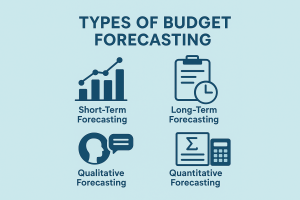
4. Quantitative Forecasting
Using historical financial data, past trends, and statistical models, quantitative forecasting provides accurate predictions. It is commonly used in budget forecasting to ensure realistic planning.
How Budgeting and Forecasting Work Together?
Here’s how the process usually works:
- A business creates a budget based on goals and past data.
- Forecasts are made regularly to track actual performance.
- Forecast results help leaders adjust the budget for greater accuracy.
- Updated insights improve strategic budgeting and forecasting decisions.
In this cycle, budget forecasting serves as a reality check for the budget, making sure the organization stays on track.
Benefits of Strong Budgeting Basics for Organizations
Improved Cost Management
Budgets help organizations control spending and cut waste. When combined with accurate budget forecasting, businesses can spot unnecessary costs early.
Better Financial Decision-Making
Leaders can make confident decisions when they have access to real-time financial information. This is the main goal of budgeting and forecasting.
Enhanced Profitability
Clear financial planning supports revenue growth while keeping costs in check. Businesses with strong budgeting basics often achieve higher long-term profitability.
Risk Mitigation
A mix of budgeting and budget forecasting helps businesses anticipate financial risks and create backup plans.
Operational Efficiency
Budgeting keeps teams aligned with organizational goals, ensuring smooth coordination. Using budgeting and forecasting consistently boosts overall operational health.
Common Mistakes to Avoid in Budgeting and Forecasting
1. Overestimating Revenue
Being overly optimistic leads to unrealistic budgets. Good budget forecasting should rely on data, not assumptions.
2. Ignoring Unexpected Costs
Neglecting emergency funds can lead to financial instability. Strong budgeting and forecasting must include risk buffers.
3. Not Updating Budgets Regularly
Budgets should change over time. Rigid planning can cause misalignment with business realities. Regular updates reflect solid budgeting basics.
4. Lack of Cross-Department Collaboration
Budgets often fail when teams do not coordinate. Working together on budget forecasting ensures all departments share the same goals.
How to Build a Strong Budgeting and Forecasting Process?
To effectively apply budgeting basics, businesses should follow this step-by-step approach:
Step 1: Gather Historical Financial Data
Past performance is the foundation of good budgeting and forecasting.
Step 2: Define Clear Goals
Without clear financial goals, budget forecasting becomes guesswork. Always connect budgets with growth objectives.
Step 3: Identify Revenue Streams and Costs
Detailed analysis helps apply budgeting basics better.
Step 4: Use Forecasting Tools and Technology
Modern tools make budget forecasting more accurate and less time-consuming.
Step 5: Review and Revise Regularly
Financial plans should be flexible. Regular evaluation ensures sustainable budgeting and forecasting.
Conclusion: Why Mastering Budgeting Basics Matters
Understanding budgeting basics and using them consistently allows businesses to stay organized, financially secure, and ready for the future. Budgeting helps create a stable plan, while budget forecasting prepares leaders for uncertainty. Together, budgeting and forecasting support smarter decisions and long-term success.
Whether you are a small business owner or a corporate leader, mastering these skills is essential for building financial strength. As markets continue to change quickly, organizations with solid budgeting and forecasting abilities will always have an edge.
Frequently Asked Questions


