
C vs. C++: Key Differences Every Programmer Should Know
Programming has come a long way since the invention of the first high-level languages. Some of the most impactful and seminal are C and C++ programming languages. Both have defined the construction of modern software, operating systems, and applications today. However, although they share commonalities, they vary in style, characteristics, and usages.
If you’ve ever been curious about why C and C++ are different, this in-depth guide will make you understand the distinct features, strengths, and when and why to use which. Let’s go in-depth into the difference between C and C++, why both are so relevant even today, decades after they were developed.
Table Of Content
What is C?
Major Features of C
What is C++?
Key Characteristics of C++
Features of C Programming
Features of C++ Programming
Difference between C and C++: Explained
C and C++ Programming in Modern Development
Advantages of Learning C and C++ Programming
When to Use C vs C++
Grow Your Career with Jaro Education
Conclusion
Frequently Asked Questions
What is C?
C is a programming language created in the early 1970s by Dennis Ritchie of Bell Labs. It was originally intended to build the UNIX operating system and later became the basis for numerous other programming languages.
In C and C++ programming, C is termed as the “mother of all programming languages” since it laid down many of the fundamental concepts, such as data types, loops, and conditional statements, that influenced subsequent languages.
Major Features of C
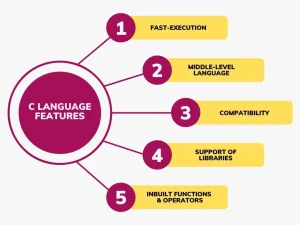
Procedural language: C is a structured, step-by-step programming paradigm in which programs are segmented into functions.
Low-level memory access: C provides direct memory manipulation through the use of pointers, thus making it very powerful for system programming.
Portable and efficient: C code can be executed on many machines with little modification, making it very portable.
Compiled language: C code is compiled to machine code directly, which gives high performance.
While considering the differences between C and C++, keep in mind that the simplicity and efficiency of C are best suited for operating systems, embedded systems, and hardware-related software.
What is C++?
C++ was created by Bjarne Stroustrup in the early 1980s as an object-oriented addition to C. It contains all the capabilities of C, plus several very influential additions that make it ideal for contemporary software development.
The primary intention behind C and C++ programming was to introduce object-oriented concepts—such as encapsulation, inheritance, and polymorphism—into the procedural paradigm of C so that code could be more modular, reusable, and scalable.
Key Characteristics of C++
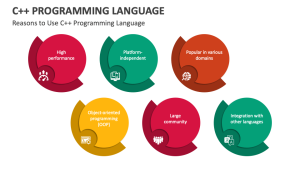
Rich Standard Library: C++ has very rich libraries that ease complex programming tasks.
Compatibility with C: C++ can execute the majority of C programs, allowing for a seamless switch for C developers.
Abstraction and Encapsulation: C++ facilitates concealing implementation details and making reusable parts.
Support for both low-level and high-level programming: This dual capability makes C and C++ programming versatile for a wide range of applications.
Features of C Programming
Features of C++ Programming
STL offers pre-built data structures, such as vectors, stacks, and maps, along with algorithms, saving development time and boosting performance.
These features make C++ a powerful language for developing various applications, from operating systems to video games and enterprise software.
Difference between C and C++: Explained
C and C++ Programming in Modern Development
- Operating Systems: Both C and C++ are heavily utilized in constructing operating systems such as Windows, Linux, and macOS.
- Embedded Systems: The low-level access of C makes it perfect for microcontroller and firmware programming.
- Game Development: C++ reigns supreme here because of its performance, object-oriented nature, and libraries such as Unreal Engine.
- Database Systems: Numerous databases, including MySQL and Oracle are implemented in C/C++.
- High-Performance Applications: Financial trading platforms, 3D modeling applications, and scientific simulations depend on C++ for their speed and efficiency.
Practically, learning C and C++ makes it possible to know how the software interacts with the hardware and enables programmers to create solid, effective programs.
Advantages of Learning C and C++ Programming
Strong Fundamentals: C introduces you to the underlying principles of memory management, data structures, and algorithms.
Versatility: C++ broadens these fundamentals into object-oriented and generic programming.
Performance: Both C and C++ provide unparalleled speed and efficiency.
Industry Relevance: Numerous industries still rely on C vs C++ codebases, ranging from aerospace to finance.
Career Opportunities: Developers proficient in these languages are in high demand for system, embedded, and game development roles.
Understanding the difference between C and C++ helps beginners transition smoothly from procedural to object-oriented thinking.
When to Use C vs C++
Grow Your Career with Jaro Education
Conclusion
Where C is designed with speed and low-level system access in mind, C++ introduces modern programming considerations like OOP, templates, and exception handling. Combined, C and C++ form an incredibly powerful design pattern for developers who want both control and flexibility with their programming languages.
Whether you’re a student, professional software engineer, or simply a technology enthusiast, learning C versus C++ gives you a fantastic foundation for understanding how computers actually work—and how to make them work for you!
Frequently Asked Questions
For beginners, C is easier as it’s more straightforward and procedural. Still, C and C++ programming both lay strong foundations — C++ introduces additional complexity with OOP concepts, but it’s more flexible once you understand the difference between C and C++.


