Government Teacher Salaries in India: Primary & Secondary Levels Explained
The teaching profession in India has long been revered. More than just a job, it is a calling that shapes the future of the nation. For those seeking stability, respectable pay, and significant impact, becoming a government teacher is the ultimate goal.
But what exactly does this career path involve, and more importantly, what is the current structure for a government teacher's salary?
This comprehensive guide breaks down the Primary, Trained Graduate (TGT), and Post Graduate (PGT) government teacher salaries across India, detailing the allowances, the eligibility criteria, and the competitive exams required to secure one of these coveted positions.
Table Of Content
How Government Teacher Salary is Calculated
Government Teacher Salary Structure by Level (7th Pay Commission)
Comparing State vs. Central Government Teacher Salary
The Essential Roadmap: How to Become a Government Teacher
Conclusion
Frequently Asked Questions
How Government Teacher Salary is Calculated
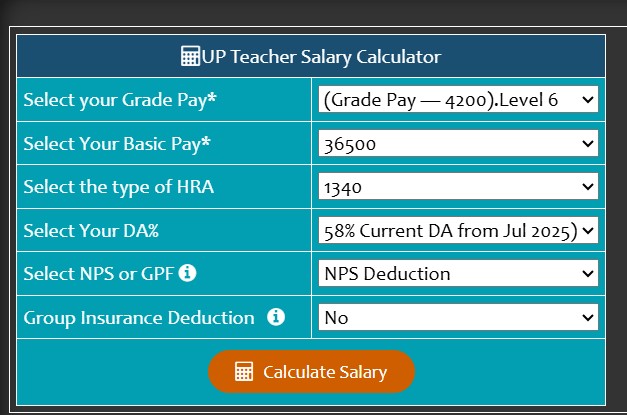
*gkiweb.com
The government teacher salary follows a fixed Pay Matrix system, which determines the Grade Pay, Basic Pay, and HRA (House Rent Allowance) based on the teacher’s level and the city of posting.
Key Components of a Government Teacher Salary per Month
- Basic Pay: The foundation of the government teacher salary, determined by the pay level and matrix cell.
- Grade Pay: A fixed amount assigned to a specific level of responsibility (now merged into the Pay Matrix).
- Dearness Allowance (DA): A cost-of-living adjustment paid by the government, typically reviewed twice a year. It is a percentage of the basic pay.
- House Rent Allowance (HRA): Paid to employees who do not reside in government quarters. This amount varies significantly based on the city category:
- X Cities (Metros): 27% of Basic Pay (e.g., Delhi, Mumbai, Chennai).
- Y Cities (Large Cities): 18% of Basic Pay.
- Z Cities (Other Areas): 9% of Basic Pay.
- Transport Allowance (TA): Fixed monthly allowance for commuting, which is also higher for those working in X and Y category cities.
- Basic Pay: The foundation of the government teacher salary, determined by the pay level and matrix cell.
Government Teacher Salary Structure by Level (7th Pay Commission)
1. Primary Teachers (PRTs) / Assistant Teachers
These teachers typically handle classes I to V. The salary structure is generally consistent across Central Government schools (like Kendriya Vidyalayas – KVS) and many State Government schools.
| Pay Component | Details (Approximate) | Pay Level (7th CPC) |
| Basic Pay | Starting point in the Pay Matrix | Level 6 (Initial: ₹ 35,400) |
| Grade Pay | Formerly ₹ 4,200 | Included in Level 6 |
| Dearness Allowance (DA) | 50% of Basic Pay (Current Estimate) | ₹ 17,700 |
| HRA (X City) | 27% of Basic Pay | ₹ 9,558 |
| Total Gross Salary (X City) | (Basic + DA + HRA) + Other Allowances | ≈ ₹ 63,000 |
| In-Hand | Gross minus Deductions (PF, etc.) | ≈ ₹ 58,000 – ₹ 60,000 |
A government teacher’s salary per month for a starting PRT in a metropolitan city is highly competitive, easily surpassing most entry-level private school salaries.
2. Trained Graduate Teachers (TGTs)
TGTs are qualified to teach classes VI to X. They require a Bachelor’s degree and a professional teaching qualification like B.Ed.
| Pay Component | Details (Approximate) | Pay Level (7th CPC) |
| Basic Pay | Starting point in the Pay Matrix | Level 7 (Initial: ₹ 44,900) |
| Grade Pay | Formerly ₹ 4,600 | Included in Level 7 |
| Dearness Allowance (DA) | 50% of Basic Pay (Current Estimate) | ₹ 22,450 |
| HRA (X City) | 27% of Basic Pay | ₹ 12,123 |
| Total Gross Salary (X City) | (Basic + DA + HRA) + Other Allowances | ≈ ₹ 81,000 |
| In-Hand | Gross minus Deductions (PF, etc.) | ≈ ₹ 75,000 – ₹ 78,000 |
3. Post Graduate Teachers (PGTs)
PGTs teach higher secondary classes (XI and XII) and require a Post Graduate degree in their subject along with a B.Ed. Their role is often seen as more specialized, leading to the highest government teacher salary among the three general categories.
| Pay Component | Details (Approximate) | Pay Level (7th CPC) |
| Basic Pay | Starting point in the Pay Matrix | Level 8 (Initial: ₹ 47,600) |
| Grade Pay | Formerly ₹ 4,800 | Included in Level 8 |
| Dearness Allowance (DA) | 50% of Basic Pay (Current Estimate) | ₹ 23,800 |
| HRA (X City) | 27% of Basic Pay | ₹ 12,852 |
| Total Gross Salary (X City) | (Basic + DA + HRA) + Other Allowances | ≈ ₹ 87,000 |
| In-Hand | Gross minus Deductions (PF, etc.) | ≈ ₹ 80,000 – ₹ 83,000 |
Comparing State vs. Central Government Teacher Salary
| Factor | Central Government (KVS/NVS) | State Government |
| HRA/TA Categories | Follows strict X, Y, Z city categorization consistently. | State capital and surrounding areas often have higher allowances; smaller districts use lower rates. |
| DA Implementation | DA and other allowances are revised promptly and uniformly as per Central Govt. orders. | States sometimes delay implementation of new DA rates due to budgetary constraints. |
| Additional Benefits | Better medical schemes (CGHS), subsidized housing options in some locations, and nationwide transferability. | Localized benefits like state health schemes; often better local pension schemes. |
Generally, the government teacher salary package offered by Central Government institutions tends to be marginally higher and more consistent due to faster implementation of pay commission recommendations.
The Essential Roadmap: How to Become a Government Teacher
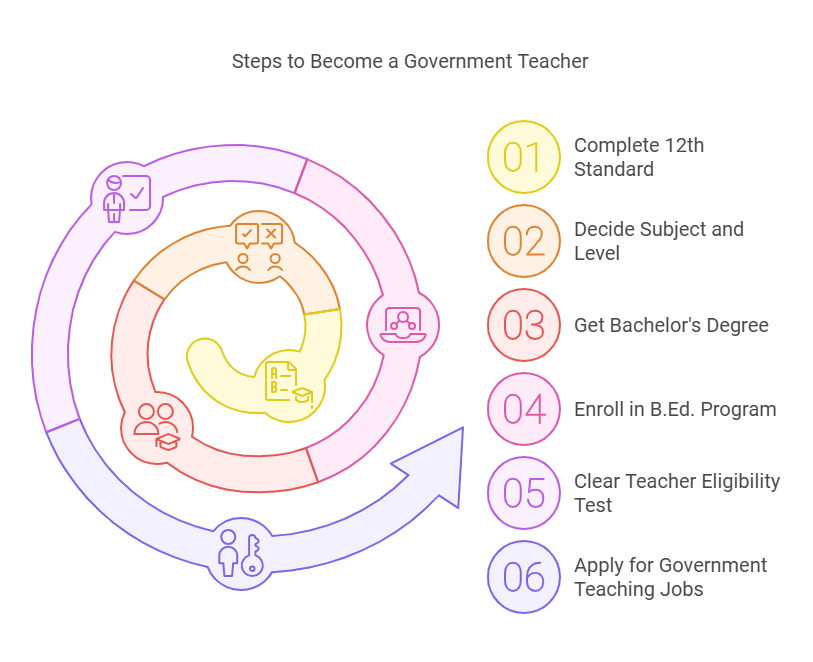
*venkateshwaragroup.in
The path to becoming a government teacher is rigorous, competitive, and clearly defined by government regulations. It involves meeting specific educational, training, and examination requirements.
Step 1: Secure Foundational Education
The first, non-negotiable step is to achieve the requisite academic qualification in the subject you wish to teach.
- Primary Teacher (PRT): 10+2 (Intermediate) with a Diploma in Elementary Education (D.El.Ed.) or a Bachelor of Elementary Education (B.El.Ed.).
- Trained Graduate Teacher (TGT): Bachelor’s degree in the relevant subject PLUS a Bachelor of Education (B.Ed.) degree.
- Post Graduate Teacher (PGT): Post-Graduate degree (M.A., M.Sc., or M.Com.) in the relevant subject PLUS a Bachelor of Education (B.Ed.) degree.
Step 2: Clear the Mandatory Eligibility Test
This is the gatekeeping step to qualify for any government exams for teachers. You must clear the Central Teacher Eligibility Test (CTET) or a state-level equivalent (e.g., TET for the respective state).
- CTET Paper I: Mandatory for teaching classes I to V (PRT).
- CTET Paper II: Mandatory for teaching classes VI to VIII (TGT).
Step 3: Crack the Government Exams for Teachers
Once academically qualified and CTET-eligible, you must apply for recruitment exams conducted by various bodies. This is where the competition is fiercest, but successful candidates secure the guaranteed government teacher salary.
- Central Government: Recruitment is handled by bodies like the Staff Selection Commission (SSC), Kendriya Vidyalaya Sangathan (KVS), and Navodaya Vidyalaya Samiti (NVS). Exams typically include a written test (General Knowledge, Subject-specific, Pedagogy) followed by an interview/demonstration.
- State Government: Recruitment is managed by the State Public Service Commissions or dedicated education recruitment boards (e.g., DSSSB in Delhi, UP TET followed by Super TET in Uttar Pradesh).
The process is long, often taking several years of dedicated preparation, but the stability and pay offered by the government teacher salary justify the effort.
Conclusion
The government teacher salary system, governed by the Central Pay Commission, ensures that a Primary Teacher in a major city can start with a gross monthly income of over ₹ 60,000, and a Post Graduate Teacher’s gross income can reach close to ₹90,000.
While the competitive government exams for teachers are challenging, the resulting job satisfaction, government teacher salary and the profound impact on students’ lives make this one of the most fulfilling careers in the country.
For those who are already in the system, pursuing executive management programs provides the strategic edge needed to transition from being an excellent educator to an impactful leader in the broader educational landscape. Plus, it can also influence your government teacher salary.
At Jaro Education, we provide various upskilling courses tailored for working professionals, including those in the education sector looking to move into administrative and leadership roles.
Visit our website to learn more!
Frequently Asked Questions


