Jaro Education
Finance
November 13, 2025

How to Become an Auditor: Roles, Salary, Steps

Every organisation, whether a small startup or a large enterprise, needs auditing to check whether the funds are shown accurately or not. And this is where professional auditors come in. But here’s a misconception we want to highlight: many of us believe that an auditor is an individual who only examines financial records. But let us tell you that an auditor, in a broader sense, is one who not only confirms financial statements and records, but also makes sure that businesses are complying with tax laws, accounting standards, etc, which are mainly set by the government or any other regulatory bodies.

In fact, their roles are vast, and for those who wish to be in this field, it is important to understand exactly what these personnel do, how to become an auditor, and their salary.

Table Of Content

6 Vital Roles and Responsibilities of an Auditor

How to Become an Auditor?
What Are the Key Skills of a Good Auditor?
Salary Trends for Auditors

Conclusion

Frequently Asked Questions

6 Vital Roles and Responsibilities of an Auditor

A finance auditor is primarily responsible for performing procedures that assess the effectiveness and efficiency of a company’s control. So, if you’re wondering “how to become an auditor”, here are some of the most common duties of an auditor that you should know about.

Planning the Audit Process

Auditor roles start by creating a comprehensive audit plan that highlights the objectives, scope, and approach of the audit. This is a planning phase that generally consists of understanding the organisation’s business operations, identifying risk, and focusing on areas that require immediate attention. Therefore, a well-structured audit plan created by finance auditors ensure that the audit will truly meet the critical aspects of the organisation’s financial reporting.

Conducting Risk Assessments

This is another primary auditor role. This assesses the risk associated with financial misstatements. It is done by identifying key areas with higher chances of errors or fraud. By examining these risks, auditors can put their efforts into other significant areas.

Examining Financial Records

Finance Auditors are also responsible for conducting a deep examination of financial statements, transactions, and supporting documentation. This also includes reviewing income statements, financial records, balance sheets, and cash flow statements. This is an important part of any auditor’s job that helps to verify the integrity of the financial information.

Preparing Audit Reports

After completing the audit, auditors now compile all their findings into a single report. This report further outlines the audit process, presents findings, and offers enhancement recommendations. A well-documented audit is quite essential for stakeholders; it helps them understand the audit result and any errors that need immediate addressing.

Testing Internal Controls

If you want to know how to become an auditor, it is important to understand that their roles also revolve around identifying the effectiveness of a company’s internal control, which is designed to prevent errors. By testing these controls thoroughly, auditors can determine whether they are working at a balanced level or not. If any weakness is found, auditors are also responsible for recommending solutions.

Identifying Fraud Risks

Here comes another important responsibility for finance auditors. Auditors are trained to recognise red flags and unusual things in financial transactions. These errors might be a sign of fraudulent activities. Thus, by doing a thorough assessment, auditors help companies implement standard measures to prevent the risk of fraud.

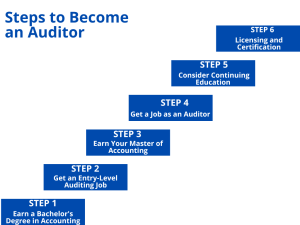
How to Become an Auditor?

How to Become an Auditor

The straightforward answer to “how to become an auditor” is given here:

Step 1: Must have a Bachelor’s Degree

Knowing the exact answer to how to be an auditor starts with pursuing a Bachelor’s degree in accounting, finance or a related field. There are several reputed universities in India that offer online degrees that form the foundation of your auditing knowledge. Some of them are:

Step 2: Earn Relevant Work Experience

If you are still looking for a solid path for “how to become an auditor in India”, look for internship opportunities or entry-level jobs that give you exposure to your knowledge in finance. Such opportunities also allow you to apply your theoretical auditing knowledge in real-world scenarios.

Step 3: Acquire Professional Certification

Having a professional certification, such as the Certified Internal Auditor (CIA) or Certified Public Accountant (CPA), can put you a step ahead in the job market. These can be obtained after passing a series of exams and meeting certain work experience requirements.

Step 4: Embrace Continual Learning

Even after having a job, it’s important to keep yourself updated with the latest business landscape and the latest financial regulations. Thus, ensure to participate in online seminars, workshops, training programmes and make yourself aware of the latest industry standards.

What Are the Key Skills of a Good Auditor?

Key Skills of a Auditor

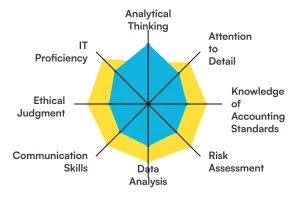
A successful auditor possesses a combination of technical knowledge, communication skills and sound moral values. The answer to “how to become an auditor” also lies in the skills you must have:

1. Integrity and Objectivity

This is one of the important auditor skills. Auditors must show integrity and independence when judging the practices of the business entity. On occasion, auditors will run into roadblocks or pressure from senior management, but a good auditor will not be swayed, will remain neutral, and will allow their judgement to be influenced only by the evidence, rather than hierarchy or personal opinion.

2. Strong Communication Skills

Auditors use definitive and convincing communication skills. Auditors do not solely prepare detailed reports. They also develop meaningful dialogue with management, communicate conclusions in an easy-to-understand and succinct manner, and use charts and other visual aids to simplify difficult concepts and make actionable recommendations.

3. Adaptation to Technology

Today’s auditor relies heavily on technology. Being technically savvy is important, as the auditor must use the role of technology to improve processes, efficiency, and evaluate risks (such as cyber risk or system-related risk).

4. Partnerships and Trust

An effective auditor is a builder of trust and good relationships. The auditor reduces resistance, fosters an understanding of what the audit is intended to accomplish, and facilitates information sharing by being proactive and transparent in their relationships.

5. Lifelong Learning

As businesses continuously adapt, auditors need to remain inquisitive and cultivate a desire to pursue educational opportunities (e.g., training, certification, or professional growth) for continual improvement. Continuing education better positions the auditor to take advantage of new trends and regulations.

EllispeLeftEllispeRight
whatsapp Jaro Education