PMP Certification vs. Agile vs. Lean Six Sigma: Which Certification Suits Your Career Goals?
In the fast-changing world of business today, these questions come up frequently: can you get PMP Certification, Agile certifications, or Lean Sigma certification? Each has its own advantages, processes, and career paths. Identifying the worth of PMP Certification, Agile methodologies, and Lean Six Sigma concepts—and matching them with your goals—can assist you in selecting the proper certificate to align with your career.
Table Of Content
Knowing PMP Certification: A Pillar of Project Management
Exploring Agile Certifications and Their Career Impact
Lean Six Sigma: Process Excellence, Quality, and Efficiency
PMP vs. Agile vs. Lean Sigma: Comparing Strengths</
When to Choose PMP Certification
When to Focus on Agile Certification?
Factors to Consider Prior to Certification Selection
Conclusion: Which Certification Truly Suits You?
Frequently Asked Questions
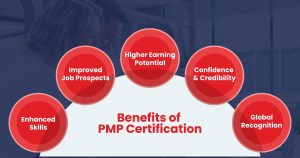
Knowing PMP Certification: A Pillar of Project Management
But in a dynamic or high-speed environment, strict processes can feel restrictive. That’s where Lean Six Sigma and Agile credentials step in, providing flexibility, ongoing improvement, and lean thinking. Let’s take a look at Agile in the next section.
*Simpliaxis
Exploring Agile Certifications and Their Career Impact
Even outside of IT, Agile principles are gaining traction in marketing, operations, and new product development. A solid Agile certification improves your ability to manage change, meet changing needs, and encourage ongoing improvement.
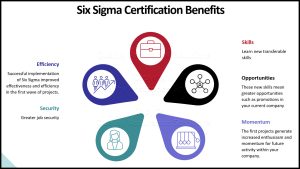
Lean Six Sigma: Process Excellence, Quality, and Efficiency
By selecting Lean Six Sigma, you prepare yourself to direct process improvement in operations, supply chain, quality assurance, or business process teams. Numerous industries—manufacturing, healthcare, finance—appreciate Lean Six Sigma for leading cost reduction, defect elimination, and productivity improvement.
Professionals with Lean Sigma certification often become process excellence leaders, quality managers, or continuous improvement specialists. Combining Lean Six Sigma with Agile or PMP Certification amplifies your versatility across project, operations, and improvement domains.
*Quality Assurance Solutions
PMP vs. Agile vs. Lean Sigma: Comparing Strengths</
1. Nature of Work & Industry Fit
PMP Certification is suited for formal project settings, emphasizing heavily on planning, control, risk, scope, and governance. It is suited for industries where predictability and adherence are essential.
Agile excels in settings handling uncertainty, constant change, and customer-focused product delivery. It is suited for software, digital transformation, innovation, and adaptive teams.
Lean Six Sigma is suited to operations, quality, process engineering, and cost control fields, where efficiency and defects can be quantified.
2. Mindset & Skill Set
PMP Certification develops top-down planning, process Kaizen in project implementation, and systematic frameworks.
Agile encourages collaboration, iterative thinking, adaptive planning, and responsiveness.
Lean Six Sigma encourages analytical thinking, statistical tools, process mapping, root cause analysis, and continuous improvement.
3. Career Path & Roles
PMP Certification tends to result in careers such as Project Manager, Program Manager, PMO Head.
Agile certifications are gateways to positions such as Scrum Master, Agile Coach, Product Owner, or Agile Project Manager.
Lean Six Sigma has a pathway to Process Improvement Lead, Quality Manager, Continuous Improvement Manager, Six Sigma Consultant.
4. Synergies & Combined Value
You don’t need to choose between the two. Most of us carry both PMP Certification and Agile with us or marry Lean Six Sigma with Agile delivery. That blended capability becomes an asset across project, operations, and quality areas of organizations that demand flexibility.
When to Choose PMP Certification
You should strongly consider PMP Certification if:
You plan to lead large or cross-functional projects in fields like construction, infrastructure, government, energy, or pharmaceuticals.
You prefer structured methods, clear processes, and strict control.
You seek roles where governance, stakeholder communication, risk management, and resource planning are important.
You want a respected credential that can help in job applications and salary discussions.
The PMP Certification exam is tough. Candidates must dedicate time to studying the PMBOK Guide, understanding process groups and knowledge areas, and preparing with mock tests and training. That effort usually pays off by building credibility and helping you secure project leadership positions.
When to Focus on Agile Certification?
Agile certification is ideal for you if:
- You are currently in or aspire to join fields like IT, software, startups, or digital transformation.
- You thrive in dynamic settings that involve rapid iterations and quick adaptation to changes.
- You are targeting roles such as Scrum Master, Agile Coach, or Agile Project Manager.
- You wish to enhance your traditional project management expertise, potentially by combining PMP Certification with Agile credentials.
Among Agile certifications, PMI-ACP is especially appealing because it connects traditional project management with agile practices. It shows your ability to work in both controlled and flexible environments.
Factors to Consider Prior to Certification Selection
1. Industry Demand in Your Locale
Investigate whether your industry—or companies you want to pursue—place a value on PMP Certification, Agile, or Lean Six Sigma credentials. In certain geographies, Agile is more prevalent; in others, Lean Six Sigma will be a differentiator.
2. Your Career Goals
If you are interested in running projects start-to-finish, PMP Certification would be your best choice. If you’d prefer to coach teams or drive Agile transformation, select Agile. If you are interested in operations and ongoing improvement, Lean Six Sigma would be your path.
3. Your Strengths and Interests
Do you prefer planning, structure, and control (PMP Certification)? Or do you prefer ambiguity and fast change (Agile)? Or do you prefer detail, analysis, and enjoy process discovery (Lean Six Sigma)? Choose the path that fits your inherent strengths.
4. Organizational Maturity & Culture
Your target employer or your current organization might already adhere to Lean or Agile principles. In those setups, Agile or Lean Sigma certification can be more desirable compared to conventional PMP Certification. On the other hand, highly regulated or conservative industries might prefer PMP.
5. Time, Commitment & Prerequisites
PMP Certification has documented experience and formal education as requirements; Agile certifications are different in terms of prerequisites; Lean Six Sigma usually requires working on real process improvement projects. Consider your availability and ability to devote.
Conclusion: Which Certification Truly Suits You?
There is no one-size-fits-all answer to the PMP Certification vs. Agile vs. Lean Six Sigma discussion. The right certification depends on your industry, career goals, personal strengths, and organizational context.
If your career is in project management in structured, regulated environments, PMP Certification gives you credibility and a solid framework. If you work in dynamic, uncertain areas and want to lead teams through change, Agile credentials provide flexibility, responsiveness, and adaptable thinking. If you are passionate about process excellence, efficiency, and quality, Lean Six Sigma offers tools to achieve measurable process improvement.
Ultimately, many professionals gain an advantage by stacking certifications such as PMP, Agile, and Lean Six Sigma. This helps them position themselves as adaptable leaders across project, operational, and improvement areas. Assess your current situation, your goals, and which credential best fits your vision. With that clarity, your investment in certification will more effectively advance your career goals.
Frequently Asked Questions
Yes, a Lean Six Sigma certification is very valuable for professionals focused on improving processes and achieving operational excellence. It helps improve quality, reduce waste, and increase efficiency across business functions.
Lean Six Sigma focuses on optimizing processes and removing inefficiencies, while project management (like PMP or Agile) emphasizes planning and executing projects. Combining both Lean Six Sigma and PMP certification boosts overall performance outcomes.


