
YouTube Income in India 2026: How Much Can You Earn?
 April 11, 2025
 8 min read





Table Of Content
- How Creators Actually Earn YouTube Income
- YouTube Partner Program (YPP) Requirements
- Upcoming YouTube Monetization Changes in 2027
- Realistic YouTube Income in India
 Key Insights
- YouTube income in India depends on views, RPM, niche and audience location. Creators may earn around ₹50–₹200 per 1,000 views.
- Creators can earn through ads, YouTube Premium, memberships, sponsorships and affiliate marketing.
- Finance, technology, business and education niches can attract higher RPMs and better earning potential.
- Consistent content, audience engagement, analytics and digital marketing skills can help grow a channel and increase YouTube earnings.
- Higher views do not always mean higher income, but a channel with around 1 lakh views can potentially earn ₹5,000–₹20,000 from ads, depending on its RPM and audience.
YouTube has evolved far beyond entertainment, becoming a dynamic digital marketplace where creators can transform audience attention into a sustainable stream of income.
India has emerged as a global creator hub, with 100 million+ YouTube channels uploading content in a single year and more than 15,000 channels crossing 1 million subscribers. YouTube has also paid over ₹21,000 crore to Indian creators, artists, and media companies in just three years. Yet, these impressive figures do not mean every creator earns equally.
YouTube income depends on views, audience geography, niche, watch time, engagement, and revenue streams beyond advertising. From a growing side income to a full-time business, the earning potential can vary dramatically. This guide explores what creators can realistically earn in India in 2026.
 ChatGPT
 Perplexity
 Claude
 Grok
GrokHow Creators Actually Earn YouTube Income
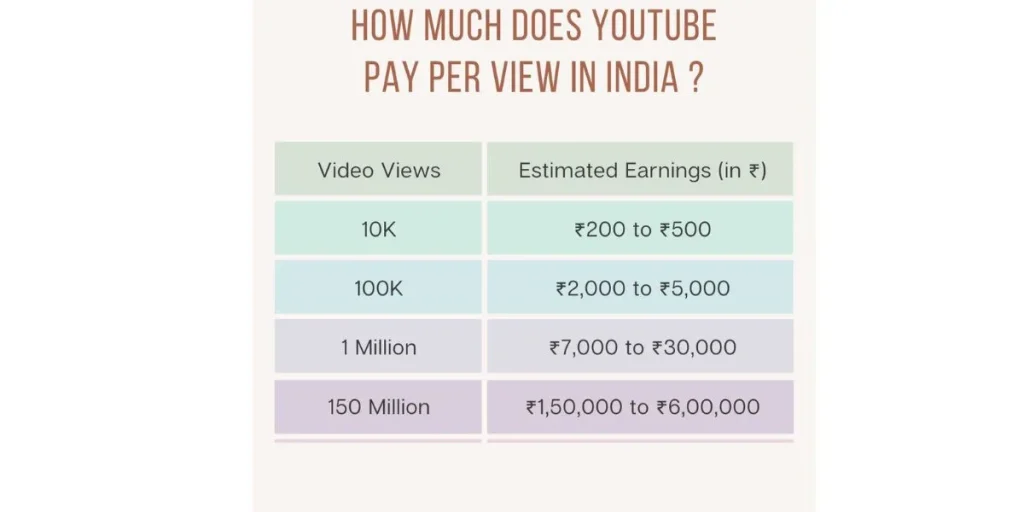
Before we get to the numbers behind YouTube income, let’s quickly understand how it works. YouTube pays creators through the YouTube Partner Program (YPP).
To become eligible for ad revenue, a creator generally needs 1,000 subscribers and either 4,000 valid public watch hours in the past 12 months or 10 million valid public Shorts views in the past 90 days.
So, here’s how the earnings work:
- CPM (Cost Per Mille): The amount advertisers pay per 1,000 ad impressions. This is an advertiser-side metric and does not represent the creator’s actual earnings.
- RPM (Revenue Per Mille): The creator’s estimated revenue per 1,000 video views, after YouTube’s share and other revenue factors are taken into account. YouTube’s RPM can include revenue from ads, YouTube Premium, memberships, Super Chat and other monetisation sources.
For Watch Page ads, YouTube pays creators 55% of net ad revenue, while YouTube retains the remaining 45%. However, this should not be interpreted as a fixed 45% deduction from every advertiser payment, because the revenue calculation is based on net revenue.
RPM can also change from month to month depending on factors such as audience location, content category, seasonality, advertiser demand and the number of views that are monetised. Therefore, there is no fixed monthly YouTube income for a given number of views.
YouTube Partner Program (YPP) Requirements
To earn YouTube Income, creators need to meet the eligibility requirements of the YouTube Partner Program (YPP). YouTube has different levels of access depending on the number of subscribers and views a channel receives.
Credit: nealschaffer.com
| Level | Requirements | Main Benefits
|
| Early access | 500 subscribers + 3 uploads + 3,000 watch hours or 3M Shorts views | Memberships, Super Thanks, Super Chat and Shopping |
| Ad revenue | 1,000 subscribers + 4,000 watch hours or 10M Shorts views | Video ads, Shorts ads and YouTube Premium revenue |
Meeting these numbers does not guarantee approval. YouTube also reviews channels to ensure they follow its monetisation policies and other eligibility requirements.
Upcoming YouTube Monetization Changes in 2027
YouTube has announced changes to its monetisation requirements that will take effect from February 1, 2027. New creators seeking access to advertising and YouTube Premium revenue sharing will need to meet updated eligibility thresholds.
From February 1, 2027, the requirements will include:
- 1,000 subscribers + 8,000 valid public watch hours in the past 12 months, or
- 1,000 subscribers + 20 million valid public Shorts views in the past 90 days.
These updated requirements will apply to new creators seeking ad and YouTube Premium revenue sharing. Creators already in the YouTube Partner Program will not be removed solely because they do not meet the new thresholds.
Until these changes take effect, the existing YPP requirements of 1,000 subscribers and either 4,000 valid public watch hours or 10 million valid public Shorts views remain applicable.
Realistic YouTube Income in India
Income by YouTube depends more on views, RPM, niche and audience than subscriber count. For Indian long-form content, a broad estimated RPM of ₹50 – ₹200 per 1,000 views can be used as a general benchmark, although actual earnings vary by channel.
| Monthly Views | Estimated Monthly Earnings |
| 10,000 | ₹500–₹2,000 |
| 50,000 | ₹2,500–₹10,000 |
| 1 lakh | ₹5,000–₹20,000 |
| 5 lakh | ₹25,000–₹1 lakh |
| 10 lakh | ₹50,000–₹2 lakh |
| 50 lakh | ₹2.5 lakh–₹10 lakh |
| 1 crore | ₹5 lakh–₹20 lakh |
These estimated earnings from YouTube are not guaranteed. Finance and technology channels may earn more because of higher advertiser demand, while entertainment and gaming can have lower RPMs. Shorts also generally earn less per 1,000 views than long-form videos.
Subscriber count alone does not determine earnings. A smaller channel with more monthly views can earn more than a larger channel with fewer views.
Factors That Influence YouTube Income
Raw views are only the starting point. Several factors influence estimated earnings on YouTube, including:
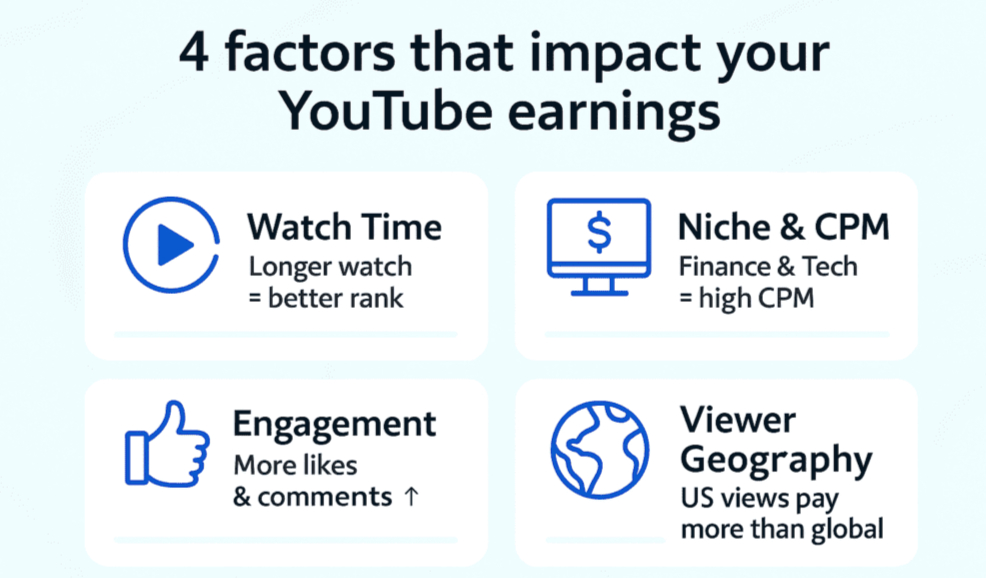
- Niche: Finance, insurance and technology can have higher ad rates than entertainment because advertisers may pay more to reach these audiences.
- Audience Geography: Views from countries such as the US, UK and Canada can generate higher RPMs than views from India, affecting youtube earnings per 1000 views.
- Watch Time: Longer videos can provide more opportunities for ads, while strong viewer retention can help increase monetised views.
- Ad Formats: Skippable, non-skippable and mid-roll ads have different revenue potential. Mid-roll ads are available on videos 8 minutes or longer.
- Seasonality: Advertising demand often increases during major shopping and holiday periods, which can improve creator revenue.
- Upload Consistency: Regular uploads can help channels build an audience and generate more views over time.
As a result, earnings from a YouTube channel can vary significantly. Even YouTube 1 million views income is not fixed and depends on RPM, audience and content type. Your monthly income from YouTube can therefore change from month to month.





Highest-Paying YouTube Niches
Not every YouTube niche earns the same. Advertiser demand, audience location, content type and monetisation methods can significantly affect YouTube income. Some niches generally attract higher-value advertisers than others.
1. Finance and Investing
Finance, investing, insurance, credit cards and personal finance can attract high-value advertisers because financial companies compete for customers. This can result in higher CPMs and RPMs compared with some entertainment categories.
2. Technology and Gadget Reviews
Technology channels covering smartphones, laptops, software and AI can benefit from strong advertiser demand. Creators can also supplement earnings from a YouTube channel through affiliate marketing and brand partnerships.
3. Digital Marketing and Online Business
Digital marketing, freelancing, entrepreneurship and business content can attract advertisers promoting marketing tools, software, courses and business platforms. This makes it a potentially valuable niche for creators.
4. Education and Career Development
Exam preparation, professional skills, career guidance and educational content can attract EdTech companies and other advertisers. Creators can also diversify their revenue through courses, memberships and partnerships.
5. Health, Fitness and Wellness
Fitness and wellness channels can attract advertisers from fitness apps, sportswear, wellness products and related services. Sponsorships can also contribute significantly to creator revenue, although advertising rates vary.
6. Lifestyle and Vlogging
Lifestyle content may not always have the highest CPM, but creators can generate monthly income from YouTube through ads, sponsorships, affiliate marketing and product collaborations.
7. Beauty and Fashion
Beauty, skincare and fashion creators can earn through advertising, brand collaborations and affiliate marketing. Product-focused content can also create additional revenue opportunities beyond YouTube ads.
8. Gaming
Gaming has a large global audience and multiple monetisation opportunities. Along with advertising, creators can earn through sponsorships, memberships, live-streaming features and merchandise.
Which YouTube Niche Pays the Most?
There is no single niche with a guaranteed highest YouTube earnings per 1000 views. Finance, technology and business content can often attract higher-value advertising, but actual estimated earnings on YouTube depend on factors such as audience geography, RPM, watch time and advertiser demand.
Therefore, don’t choose a niche based on CPM alone. Choose one where you can consistently create useful content and build audience trust. Higher views, strong engagement and multiple revenue streams can have a greater impact on your overall YouTube income.
How to Start Earning YouTube Income: A Beginner's Roadmap
Here’s a practical roadmap to building YouTube income and reaching monetisation:
- Choose the right niche: Pick a topic you can consistently create content about while considering audience interest and advertiser demand.
- Set up your channel: Use a clear channel name, professional banner, relevant description and organised content to make your channel easy to understand.
- Create consistently: Publish your first 20–30 videos as an opportunity to test topics, formats and audience preferences. There is no fixed number of videos required for monetisation.
- Track your analytics: Monitor views, watch time, audience retention and click-through rate to identify what performs best and improve future videos.
- Meet YPP requirements: For ad revenue, you generally need 1,000 subscribers and 4,000 valid public watch hours in the past 12 months, or 10 million valid public Shorts views in 90 days.
- Diversify your revenue: Once your channel grows, consider affiliate marketing, sponsorships, memberships and other eligible monetisation features to increase your monthly income from YouTube.
- Engage with viewers: Reply to comments, ask questions and build a community. Strong audience relationships can support long-term earnings from a YouTube channel.
Digital Skills That Can Help Grow Your YouTube Channel
YouTube success involves more than creativity and consistent uploads. Understanding digital skills such as SEO, content strategy, copywriting and analytics can help creators improve discoverability, engagement and overall YouTube income.
- SEO: Optimise video titles, descriptions and other relevant elements to help viewers discover your content through YouTube and Google search.
- Content Strategy: Research audience interests and create content around relevant topics and search intent.
- Data Analytics: Use YouTube Analytics to track views, watch time, audience retention and other performance metrics to improve future content.
- Copywriting: Write compelling titles, descriptions and calls to action that encourage viewers to click and engage.
These skills can help creators build an audience and create opportunities for earnings from a YouTube channel. However, there is no guaranteed income, as revenue depends on factors such as views, RPM, audience and monetisation methods.
For aspiring creators and digital professionals, Jaro Education offers courses in areas such as digital marketing, data analytics and emerging technologies. Developing these skills can support both content creation and broader digital career opportunities.
Final Thoughts
Building YouTube income takes more than simply uploading videos. Your earnings depend on factors such as views, RPM, niche, audience location and monetisation methods. While
YouTube 1 million views income can vary widely, consistent content, audience engagement and the right digital skills can help create sustainable earnings from a YouTube channel. Focus on providing valuable content, understand your analytics and explore multiple revenue streams as your channel grows. Most importantly, treat YouTube as a long-term opportunity rather than a quick way to earn money.
Frequently Asked Questions
In India, the YouTube income per 1000 views varies from Rs. 30 to Rs. 200. This amount varies depending on your niche, audience, and season. Finance and technology videos have the highest income, while entertainment videos can comparatively can fall on lower side.
To check YouTube income, go to YouTube Studio, then Analytics, and click on the Revenue tab. In this tab, you can see the revenue, RPM, CPM, and monetized playback. Payments are made monthly, and daily estimates are available throughout the month.

Related Courses
Explore our programs






Find a Program made just for YOU
We'll help you find the right fit for your solution. Let's get you connected with the perfect solution.

Is Your Upskilling Effort worth it?
 ROI Calculator

Are Your Skills Meeting Job Demands?
Try our Skill Gap tool
Experience Lifelong Learning and Connect with Like-minded Professionals
Explore Jaro Connect
