
Stakeholder Management: An Important Business Asset
In this busy corporate world, dealing with stakeholders isn’t just an additional skill to have. It’s the framework that allows for effective/informed decision-making and the long-term success of a business. After all, when multiple people with different goals and interests are involved, aligning their goals with the right business strategies becomes the secret ingredient to growth.
But are you curious about how to make that happen? This blog will define what stakeholder management really is, explain how to do it, and provide efficient strategies that you will be able to use in the workplace. In the end of this blog, you will be left with new ideas, clarity, and strategies to demonstrate your stakeholder management skills.
Table Of Content
What is Stakeholder Management?
The Stakeholder Management Process
Importance of Stakeholder Management
Stakeholder Management Skills
Wrapping Up
Frequently Asked Questions
What is Stakeholder Management?
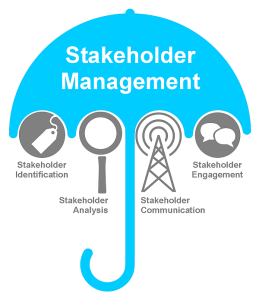
If you want to learn about the true stakeholder management meaning, here it is.
Stakeholder management is the process by which you organise, monitor, and enhance your relationship with your stakeholders. It involves identifying stakeholders’ needs and expectations, and then planning various tasks to engage with them. This also helps you to coordinate your interactions and assess the quality of your relationships so that you can achieve a result, legal requirement, or strategic benefit. In fact, sometimes stakeholder management is also referred to as community engagement, public consultation, public participation, and more. However, there are some subtle differences between all these terms, including how they are used, but in the end they all have similar principles.
There are different types of internal and external stakeholders. For example, it includes employees, customers, suppliers, communities, and governments. However, regardless of different types, these stakeholders have some attributes in common, they are:
- Influence: Stakeholders can influence their opinion to advance the product strategy and create a roadmap.
- Connection: Stakeholders are mainly concerned about the product as they are influenced by product decisions.
- Power: Stakeholders are important as they have all the information related to product approval, budget, and cooperation that a product manager needs.
- Irreplaceability: Each stakeholder or stakeholder role (e.g., CFO) brings a unique value to the project.
The Stakeholder Management Process
Importance of Stakeholder Management

Stakeholder management is an important process for any organisation and projects, and has a range of importance, some of which are:
- Promotes trust and transparency: Regular updates and clear communication build trust.
- Minimises risk: Raising concerns early reduces the risk of larger issues arising later.
- Aligns goals: Engaging stakeholders ensures that everyone helps work toward your desired outcome rather than working toward competing outcomes.
- Supports decision-making: Stakeholders will support better decisions that align with your goals and consider unique perspectives.
- Enhances project success: Research shows that projects with active stakeholder engagement are more successful than projects without stakeholder engagement.
Stakeholder Management Skills
Wrapping Up
So, it’s wise for project managers to prepare themselves with the best practices and demanding skills to outperform. If you want to become a leader, Jaro Education brings online courses and a professional certification programme in project management in collaboration with renowned Indian institutions. One of them is the Executive Certificate Programme in Advanced Project Management and Analytics offered by IIM Mumbai. This industry-focused programme provides executives with the prevailing knowledge, behavioral skills, processes, tools, and techniques necessary to excel in project management.
Visit our website, connect with our career experts, and discover how you can become a successful Project Management professional.
Frequently Asked Questions
Stakeholder Management is important because it keeps all stakeholders at all levels aligned with one another, reduces the likelihood of conflict, establishes trust, and ultimately increases the chances of a project being deemed a success.
If stakeholder management is neglected, the project will likely encounter resistance, a lack of support, misunderstandings, and potentially fail.


