
Types of Cloud Services and Deployment Models
 April 9, 2025
 5 min read




Table Of Content
- Types of Cloud Computing Services
- Types of Cloud Deployment Models
- Transcend into Cloud Computing Professional with PG Certificate Programme in Cloud Computing by IIT Palakkad
In the rapidly changing digital ecosystem today, cloud technology acts as the backbone to modern business operations. Organizations, ranging from startups and SMEs to large enterprises, are increasingly adopting cloud-based infrastructures that help improve scalability while reducing costs and improving overall efficiency. As more and more companies move toward adoption, the need to understand the different types of cloud computing and deployment models also grows, in order to make prudent technology decisions. Each type of cloud computing offers unique benefits, ranging from flexible storage options and seamless access to data, to improved collaboration and advanced automation.
Businesses have to analyze their operational needs, the level of security, and long-term goals before choosing an appropriate cloud model. Whether you're looking into cloud platforms for application development, data analytics, disaster recovery, or enterprise resource planning, understanding the differences that exist between service models-IaaS, PaaS, and SaaS-along with a number of deployment approaches, including public, private, hybrid, and multi-cloud, becomes critical.
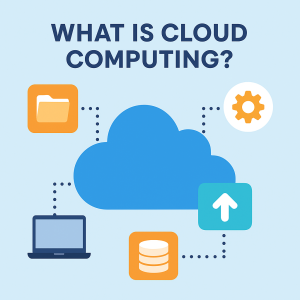
This blog will take you through a step-by-step guide on various cloud computing types and their deployment models; it helps you understand how each option works, what advantages they can offer, and which model suits your organizational needs. With the right cloud strategy, businesses can unlock innovation, boost productivity, and gain a competitive advantage in an increasingly digital-first world.
Types of Cloud Computing Services
Infrastructure-as-a-Service
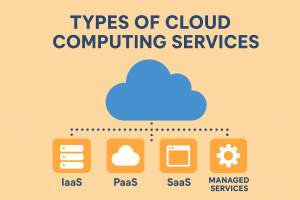
IaaS is one primary type of cloud computing service. It provides a virtualised computing infrastructure over the Internet, allowing businesses to rent servers, storage, and networking resources. Customers have control over their operating systems and applications, but are responsible for managing and securing their data. One major advantage of IaaS is its scalability. Businesses can easily scale up or down their IT infrastructure based on their needs without worrying about the physical limitations of traditional data centres. This makes it ideal for companies with fluctuating workloads or seasonal demands.
Platform-as-a-Service
Another type of cloud computing service is PaaS. It provides a platform for businesses to develop, deploy, and manage applications without worrying about infrastructure management. It offers a runtime environment and a set of tools and services to build and run applications. With PaaS, developers can focus more on coding their applications rather than worrying about managing the underlying infrastructure. This type of cloud service allows for faster development cycles since it eliminates the need to set up and maintain hardware or software components.
Software-as-a-Service (SaaS)
SaaS provides a software application that runs on a cloud infrastructure and is accessible through the Internet. It eliminates the need for businesses to install and maintain software on their local computers and allows them to pay for the software on a subscription basis. One of the biggest advantages of SaaS is its accessibility. All you need is an internet connection and a web browser, which allows users to access their applications from anywhere in the world. Additionally, since all maintenance and updates are done by the provider; there is no need for businesses to hire IT staff to manage their software.
Managed Services
Managed Services is a cloud computing model that provides an organization with ongoing IT support and maintenance. This type of service allows businesses to focus on their core operations while leaving the responsibility of managing, monitoring, and maintaining their IT infrastructure in the hands of experts. The Managed Services model includes services such as network administration, server management, security monitoring, backup and disaster recovery solutions, among others. In essence, it covers all aspects of ensuring that the customer’s systems are operational at all times.
Types of Cloud Deployment Models
1. Public Cloud
The public cloud refers to cloud services that are provided by third-party providers and are accessible over the Internet. Customers can rent services and pay for what they use without worrying about infrastructure management. The provider is responsible for managing the infrastructure, security, and maintenance.
2. Private Cloud
Private cloud refers to cloud services that are provided within a company’s own infrastructure or on a third-party provider’s infrastructure. It offers greater control and security but requires significant upfront investment and maintenance.
3. Hybrid Cloud
A hybrid cloud is a combination of public and private cloud services that allow businesses to use both environments to meet their specific needs. It offers flexibility and scalability, enabling organisations to run critical applications on private clouds and less sensitive workloads on public clouds.
4. Multi-Cloud
Multi-cloud refers to the use of multiple cloud services from different providers to meet specific business needs. It offers greater flexibility, redundancy, and resilience but requires careful management and integration.
Transcend into Cloud Computing Professional with PG Certificate Programme in Cloud Computing by IIT Palakkad
The programme covers a wide range of topics, including Cloud Foundations, Big Data Management and Analytics, Microservices, Fundamentals of Programming, Data Structures, and Algorithms. Students will learn how to design, deploy, and manage cloud-based solutions and gain hands-on experience through practical sessions and a capstone project.
The programme is designed for working professionals and graduates who want to upskill and advance their careers in cloud computing. It is delivered through online classes, enabling students to learn at their own pace and convenience.
Final Thoughts
Cloud computing is a rapidly evolving technology that offers a range of cloud computing services and cloud computing deployment models to meet specific business needs. Understanding the types of cloud services and deployment models is crucial for businesses to make informed decisions about their IT infrastructure and choose the right solution for their specific requirements. The PG Certificate Programme in Cloud Computing by IIT Palakkad is an excellent opportunity for individuals who want to excel in their careers in cloud computing. This is hands down one of the best cloud computing courses that provides comprehensive knowledge and practical skills in various types of cloud computing, cloud technologies and prepares students to meet the demands of the rapidly evolving industry. Professionals who want to advance their careers in this dynamic domain of cloud computing should connect with our programme experts today.
Frequently Asked Questions
IaaS, PaaS, and SaaS are the core types of cloud computing services that provide infrastructure, platforms, and software through the cloud. These models help organizations adopt appropriate cloud computing kinds according to their architecture needs and selected cloud deployment models.
The three basic types of cloud computing services are IaaS, PaaS, and SaaS, and they form the core of most enterprise cloud strategies. These service categories play a role in determining an organization’s adoption of different types of cloud computing and their choice of preferred cloud deployment models.
Find a Program made just for YOU
We'll help you find the right fit for your solution. Let's get you connected with the perfect solution.
Is Your Upskilling Effort worth it?
 ROI Calculator

Are Your Skills Meeting Job Demands?
Try our Skill Gap tool
Experience Lifelong Learning and Connect with Like-minded Professionals
Explore Jaro Connect

