
What is Data Science for Managers and Why It’s a Game-Changer in Decision Making
In today’s fast-paced business world, managers face complex decision-making challenges that require more than just intuition and experience. The rise of big data has changed how organizations operate, making informed decisions essential. This is where data science for managers plays a key role, connecting raw data to useful insights.
Data science involves extracting valuable knowledge from large amounts of data using techniques like analytics, statistical modeling, and machine learning. Its importance in management has grown as leaders rely more on data-driven strategies to stay competitive. Combining data science with management helps managers make better decisions, predict trends, and improve efficiency.
By using these tools, managers can turn decision-making from guesswork into a well-structured, evidence-based process. This is why taking a data science for managers course is becoming crucial for modern leaders—helping professionals use data effectively for strategic advantage.
Table Of Content
Understanding Data Science for Managers
Why Data Science is Essential for Contemporary Management
How Data Science Improves Decision-Making for Managers
Core Data Science Tools and Concepts for Managers
Challenges and Considerations
The Future of Data Science in Management
Conclusion
Frequently Asked Questions
Understanding Data Science for Managers
Traditional analytics often looks at descriptive reporting—what happened in the past. In contrast, data science provides predictive and prescriptive insights, enabling managers to foresee future trends and suggest the best courses of action. This is where the connection between data science and management makes a significant impact.
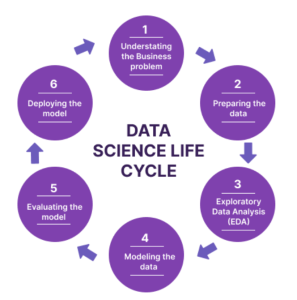
Key elements of data science include data collection, analysis, visualization, and predictive modeling. Data collection ensures that managers have relevant and accurate information. Analysis turns this information into actionable insights, while visualization helps present complex data in easy-to-understand formats. Predictive modeling enables managers to forecast outcomes and tackle challenges proactively.
Even managers without technical skills gain a lot from understanding these ideas. A solid understanding of data science principles enhances decision-making, boosts efficiency, and improves leadership skills. That’s why a data science for managers course is so valuable—it gives leaders the tools they need to navigate the changing business environment confidently and strategically.
*Naukri.com
Why Data Science is Essential for Contemporary Management
Managers without data-driven insights must then resort to their intuition, which can result in missed opportunities or expensive errors. Conversely, embedding data science into management yields accuracy and precision in decision-making, empowering leaders to navigate the unknown with confidence. Data science allows for accurate forecasting, sharper problem-solving, and more effective operations.
The rewards are significant—more accurate results, increased efficiency, and competitive advantage in an evolving marketplace. Businesses that adopt data science have the potential to better forecast market change, better utilize resources, and innovate quicker. There are countless real-world instances: from online retailers employing predictive analytics to personalize suggestions, to manufacturing companies leveraging data science for predictive maintenance, lowering downtime and expenses substantially.
In brief, data science has become unavoidable for contemporary management. That’s why taking a course in data science for managers is not only an option—it is a leadership investment in future capabilities.
How Data Science Improves Decision-Making for Managers
Improved Forecasting is amongst the strongest benefits of data science to managers. Through the use of past data and predictive models, managers are able to forecast market trends, customers’ preferences, and business transformation. Such a forward-looking attitude enables organizations to position themselves better than their rivals and react quickly to change.
Risk Mitigation is another critical advantage of unifying management and data science. Advanced analytics help managers detect potential problems prior to their escalation, facilitating timely intervention. Such a function reduces costs, safeguards brand image, and enhances organizational resilience.
Resource Optimization is critical to optimize efficiency to its fullest. Data science applications enable managers to deploy resources more wisely—whether it is manpower, budgets, or time—by identifying areas with the greatest returns. This maximizes resources in a strategic manner, leading to operational excellence.
Personalization & Strategy revolutionize decision-making. Managers leveraging data insights are able to personalize strategies by customer segment, enhancing satisfaction and engagement. It results in greater conversion and long-term loyalty.
A practical example illustrates this effect: a store manager utilised insights from a data science for managers course to implement predictive analytics, enabling the firm to forecast demand more accurately. This lowered overstock expense by 20% and increased customer satisfaction by having a better availability of products. These instances demonstrate how data science and management complement each other to enhance decision-making and produce sustainable business success.
*AnalyticsYogi
Core Data Science Tools and Concepts for Managers
Key terminology all managers need to be familiar with are big data, predictive analytics, data visualization, and tracking KPI. Big data is large and unstructured datasets that uncover subtle patterns, while predictive analytics applies statistical methods to predict future consequences. Data visualization transforms data into graphics and charts that make sense quickly and easily, and KPI tracking enables managers to monitor performance against strategic goals.
Embedding such tools in day-to-day activities is a perfect example of data science and management synergy. For example, dashboards have the ability to aggregate real-time information so that managers can see at a glance how performance stands, and predictive analytics informs strategic decisions. This ability is precisely why taking a data science course for managers has the potential to be revolutionary—allowing leaders to tackle problems with accuracy and speed. Finally, the tools enable managers to convert raw data into competitive edge, allowing for wiser and more assertive decisions.
Challenges and Considerations
Another factor to consider is the interpretation of the data. With or without sophisticated tools, insights need to be interpreted in the context of the right business. This entails managers bridging the gap between decision-makers and technical teams, converting technical analysis into executable strategy. This is where data science and management converge most urgently.
Ethical issues and data privacy are also important. Managers have to follow regulations and be transparent regarding the collection and utilization of the data. Guarding customer and organizational data fosters confidence and protects long-term achievement.
The Future of Data Science in Management
To keep up with these changes, managers must learn new skills and tools. A solid understanding of data science and management enables leaders to read AI outputs clearly, use automation tools, and apply real-time analytics for a competitive edge. Data literacy is becoming more than just a technical skill; it is now an important part of management. This change allows leaders to share insights clearly and develop informed strategies.
For managers wanting to stay ahead, a data science for managers course provides a valuable opportunity. It helps leaders understand the future landscape, use advanced tools, and make data-driven decisions. As data’s importance continues to rise, those who adjust will lead the next generation of agile, data-driven organizations.
Conclusion
Data science has changed the way businesses run. It makes everything related to management so much more specific and data-driven as opposed to choosing randomly. The factors of uncertainty are reduced, allowing a manager to embrace complexity with ease. It is the combination of data science and management that provides an organization the accuracy, efficiency, and competitive edge required to survive in today’s fast-track society.
For managers, using data to drive decisions is key to long-term success. Whether they learn on their own or take a data science for managers course, improving data literacy prepares leaders for the future. By mastering the basics of data science, managers can turn data into a strategic resource that drives growth, innovation, and lasting success.
A course in data science for managers provides leaders with the knowledge needed to face these challenges, balancing technical acumen with strategic thinking. Managers are thus able to use the full power of data science without having to face its complexity carelessly.
Frequently Asked Questions
The four core functions of data science for managers are data collection, storage, analysis, and reporting. The functions enable managers to ensure data quality and yield significant insights for improved decision-making.


